Happy Dentist Game
Cinty BayEducational
4.513.00 Reviews
- Version
- 1.2
- Installs
- 1.00M
- Age Rating
- Everyone
Screenshots
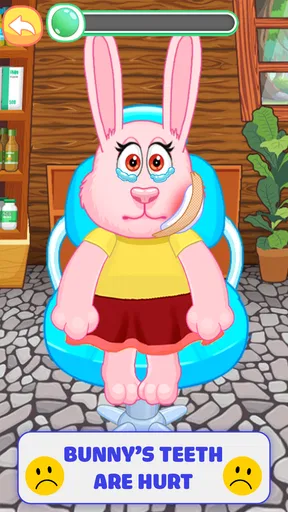
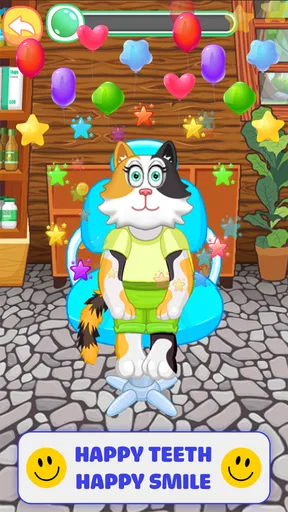
Our Review of Happy Dentist Game
 Analysis by Appyee
Happy Dentist turns a dental visit into a light educational game aimed at children and families. I found its appeal easy to understand: instead of presenting oral care as a lecture, it gives the player a playful way to interact with a dentist-themed routine. That makes it a useful choice when a child needs a gentle introduction to what can happen during a checkup, or simply wants a calm game built around helping rather than fighting.
The game comes from Cinty Bay and sits in the educational category. It is free to install, rated for Everyone, and currently runs as version 1.2 on devices using Android 7.1 or later. Its average score is 4.5 from around 5.6 thousand ratings, while the wider audience has passed one million installs. Those figures suggest that the simple idea has found a sizeable audience, but they do not replace the more important question: does the experience work for the particular child using it?
How the dental routine feels in everyday play
My first recommendation is to treat Happy Dentist as a short activity rather than a game that needs a long uninterrupted session. A child can open it, explore the dentist setting, complete a small sequence, and put the device away without losing the point of the experience. That makes it suitable for a quiet moment before an appointment, a waiting-room distraction, or a brief activity after brushing teeth.
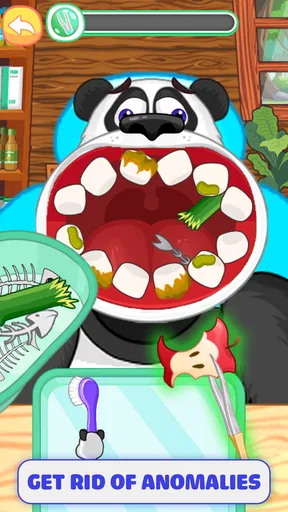
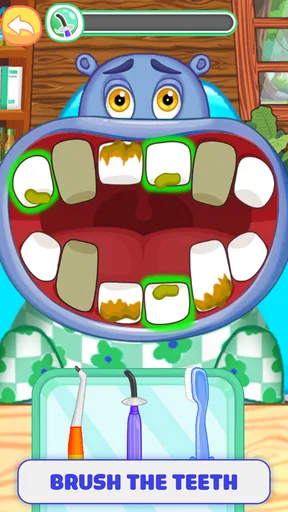
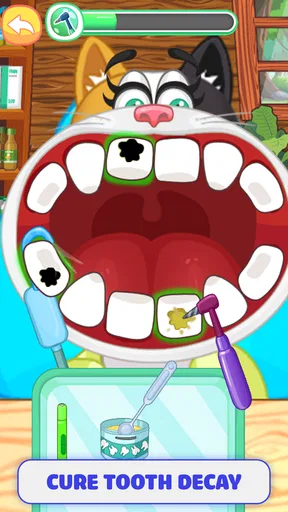
The basic workflow is approachable. The player is placed in a dentist role and interacts with the patient-focused scene through straightforward touch controls. The central pleasure comes from seeing a problem and responding to it, rather than mastering complicated movement or learning a large set of rules. I appreciate that structure for younger players because it keeps attention on the theme instead of making the controls the main challenge.
A useful way to play is to let the child explain what they think is happening before stepping in. If a tool or action appears, ask what it might be used for and why a dentist would use it carefully. This turns a few minutes of tapping into a conversation about checkups, cleaning, and looking after teeth. The game cannot replace professional advice, but it can make the subject feel less unfamiliar.
Parents should also keep expectations realistic. This is a themed educational game, not a complete lesson in dental health. I would not use it to teach exact brushing technique, diagnose pain, or decide whether a real appointment is necessary. Its strongest role is emotional and introductory: it gives a child a friendly context for talking about dentists without making the conversation feel like a warning.
A repeatable routine for children
Experienced use does not require secret settings or complicated shortcuts. The best habit is consistency. Let the child play through the same general sequence, then connect it to one real-world action, such as brushing before bed or remembering to rinse after a meal. Repeating that pattern helps the game become a prompt for a routine instead of another isolated screen activity.
I also found that giving the child control over the pace works better than narrating every action. Some children want to tap through quickly, while others inspect each part of the scene. Allowing that difference reduces frustration. If the child rushes, pause afterward and ask them to describe the visit. If they move slowly, avoid turning the session into a test. The educational value comes from engagement, not from finishing as fast as possible.
For a family with more than one child, the game can support turn-taking. One child can play while another names the tools or predicts the next step, then they can swap. This creates a more social use case than handing over a phone and walking away. It also exposes a limitation: the game is most effective when an adult or older child adds context. On its own, it may remain simple entertainment for children who already understand dental care.
Settings and device preparation worth checking
Before giving the game to a child, I would check the device's general sound, notification, and screen-time settings. Those are not special features of Happy Dentist, but they make a noticeable difference to the experience. A quiet audio level is better for a waiting room, and disabling unrelated notifications prevents interruptions during a short activity.
Because the game supports Android 7.1 and newer, it can work on a broad range of older and newer Android devices. That is helpful for families using a spare phone or tablet rather than a current flagship. Still, the practical experience depends on the device itself: a small screen can make touch interactions less comfortable for younger children, while an older handset may feel less responsive if it is crowded with other apps.
I would also prepare the session before handing over the device. Close unrelated apps, charge the battery if the child is going to play away from home, and decide in advance whether the session is meant to be independent or supervised. These small steps matter more than searching for advanced controls that may not exist. Happy Dentist is at its best when the surrounding setup is simple and distraction-free.
The free entry point is another practical advantage. Families can try the core experience without committing money first. There are optional in-app purchases priced from $1.49 to $6.99 per item, so I recommend checking purchase controls on a shared device before a child plays independently. The important trade-off is straightforward: the game is easy to sample, but adults should still manage spending access rather than assuming a free download means every part of the experience is unrestricted.
The Everyone rating makes the game approachable for a broad family audience, but age suitability is never identical for every child. A preschooler may need help understanding the sequence, while an older child may find the interactions too basic. I would judge it by attention span and expectations, not just by the label. A child looking for colorful, low-pressure role-play may enjoy it; a child expecting a deep simulation may lose interest quickly.
Faster patterns that make short sessions work
The quickest way to get value from the game is to give each session a small purpose. For example, before a dental visit, use it to discuss what a dentist does. After brushing, use it as a reminder to talk about why regular care matters. On a travel day, use it as a calm waiting activity. This is more effective than opening it randomly and hoping the educational message appears by itself.
I would avoid rushing through every tap simply to reach the end. The faster pattern is actually selective attention: let the child handle familiar actions independently, then slow down when something invites a question. That keeps the game from becoming repetitive while preserving the parts that encourage conversation. It also helps an adult see whether the child understands the theme or is only following visual prompts.
Another useful habit is to alternate control. On one session, the child can act as the dentist. On another, the adult can ask the child to guide them verbally. This changes the activity without requiring a new mode or a complicated challenge system. It is especially useful for children who become bored with repeated tapping but still benefit from talking about the situation.
For children who are nervous about real appointments, I would keep the tone reassuring and avoid promising that every real visit will feel exactly like the game. A game can simplify procedures and make them look predictable. Real dentists may ask questions, use different equipment, or take more time. Presenting Happy Dentist as a friendly introduction rather than a precise preview prevents disappointment and keeps trust intact.
Where the educational design reaches its limits
The simplicity that makes the game accessible also limits its depth. Children who want detailed explanations of teeth, anatomy, hygiene, or treatment choices will probably outgrow it quickly. It does not take the place of a child-friendly health resource, a dentist's explanation, or hands-on brushing guidance. If your main goal is measurable learning, you may prefer an app built around quizzes, structured lessons, or brushing timers.
It is also not the right choice for someone seeking a demanding management game. There is no reason to approach it like a complex simulation with strategic planning, resource balancing, or long-term progression. Its appeal is immediate interaction and a cheerful theme. Players who enjoy challenge, competition, or a large world may find the experience too narrow.
Parents should watch for repetition. A child may enjoy the first few sessions because the dentist setting feels new, then lose interest once the routine becomes familiar. That is not necessarily a flaw; short educational games often work best in small doses. I would rotate it with drawing, pretend play, actual toothbrushing, or a story about visiting a dentist rather than expecting one app to carry the entire topic.
The optional purchases are another boundary to manage. Even modest individual prices can become frustrating if a child repeatedly asks for extras. I would decide beforehand whether purchases are allowed and use the device's family controls where appropriate. This is not a reason to avoid the game, but it is a reason to treat the free download as the beginning of a decision rather than the whole decision.
There is also a difference between comfort and accuracy. A friendly game may reduce anxiety, but it should not be used to dismiss a child's real fear or pain. If a child says something hurts, has trouble eating, or is worried about a dental problem, the right response is an adult conversation and professional care. Happy Dentist can support that conversation, not replace it.
How it compares with ordinary alternatives
Compared with a standard cartoon or casual tapping game, Happy Dentist has a clearer purpose. The child is not only filling time; the theme gives adults an opening to discuss oral care. Compared with a brushing timer, however, it is less directly connected to the exact daily act of brushing. A timer is better when the goal is duration and routine. This game is better when the goal is familiarity with the dentist idea.
Compared with a detailed educational course, it is easier to start and less demanding. That makes it a stronger first step for a young child who would ignore a lesson, but a weaker choice for an older child who wants facts and progression. Compared with pretend play using toy medical equipment, it offers immediate visual feedback and a ready-made scenario, while physical pretend play may encourage more imaginative conversation and less screen time.
That comparison helped me place the game correctly. I would choose it for a short, friendly introduction, not as the only dental resource in the home. Its value increases when paired with a real habit or discussion. Without that connection, it can become a pleasant dentist-themed activity whose educational effect fades after the novelty wears off.
Who should try it and who should skip it
I think Happy Dentist is a good fit for parents looking for a free, approachable game to help a child talk about dentists. It is also suitable for a child who likes role-play, simple touch interactions, and helping characters. The Everyone rating and low entry cost make it easy to test on a family device, while the broad Android compatibility makes it practical for households that do not use the newest hardware.
I would skip it if you need a precise oral-health curriculum, a serious simulation, or a game with substantial challenge. I would also look elsewhere if your child dislikes repetitive role-play or becomes frustrated by simple interactions. In those cases, a brushing-focused tool, a structured learning app, or offline pretend play may provide a better match.
My strongest practical tip is to decide the purpose before opening it. If the purpose is calming a child before an appointment, keep the conversation gentle. If it is building a brushing habit, follow the game with real brushing. If it is simply entertainment, let it be entertainment without claiming that it teaches everything about dental care. That clear framing prevents the game from being asked to do a job it was not designed to do.
My final view after using it as a family activity
Happy Dentist works best as a small bridge between play and a real conversation about dental care. I like its welcoming subject, accessible format, and ability to turn an unfamiliar appointment into something a child can imagine. The free download makes trying it uncomplicated, and the current version 1.2 keeps the experience easy to identify for families managing several apps.
At the same time, I would not oversell its educational depth. The game is limited by its simple format, and its usefulness depends heavily on how an adult connects the play session to everyday habits. The optional purchases also deserve sensible device controls. Those are manageable limitations, but they matter when deciding whether it belongs in a child's regular rotation.
After weighing those points, I would recommend Happy Dentist to families wanting a gentle dentist-themed game for short sessions, especially before an appointment or during a conversation about oral care. I would not recommend relying on it as a complete learning tool. Used with realistic expectations, it is an approachable way to make the subject feel less intimidating and a little more familiar.
For me, the best measure of success is what happens after the screen is turned off. If a child asks a question, feels more comfortable discussing a checkup, or remembers to approach brushing as part of caring for their teeth, the game has done something worthwhile. If it becomes only another repeated tapping activity, it is time to switch to a different kind of play or learning. That balance is what makes this a useful option rather than an essential one.
Verdict
Strengths of Happy Dentist Game
- Simple controls make it easy for children to start playing.
- Short treatment sessions are suitable for quick entertainment.
- Bright visuals and playful animations keep the experience engaging.
- Different dental tools add variety to each patient interaction.
- Can help children feel more familiar with basic dental procedures.
Limitations of Happy Dentist Game
- Gameplay may become repetitive after treating several patients.
- Some tools or features may be limited without in-app purchases.
- Frequent ads can interrupt play, depending on the device and version.
- The game offers little challenge for older children or adults.
- Requires careful supervision if played by very young children.
Similar Picks in This Category
View All
Little Panda Policeman
BabyBus4.0

Monster Trucks Game for Kids 2
Raz Games4.1

Little Panda's Chinese Recipes
BabyBus4.4

Little Panda's Restaurant
BabyBus4.4

Little Panda's Ice Cream Games
BabyBus4.3

Baby Panda Care
BabyBus3.8
Frequently Asked Questions
What is Happy Dentist Game, and how is it played?
Happy Dentist Game is a casual dental-care simulation designed mainly for children and families. Players take the role of a dentist and examine cartoon patients, clean teeth, remove cavities, apply treatments, and complete simple procedures. The controls are generally tap-based and easy to understand, while colorful animations and short activities make each appointment feel approachable rather than complicated.
Is Happy Dentist Game suitable for children?
The game is generally suitable for young children because it uses friendly cartoon visuals, simple instructions, and non-realistic dental procedures. However, parents should still review the recommended age rating and available content before downloading it. Some children may find tooth cleaning, injections, or cavity treatment slightly uncomfortable, even though the presentation is designed to be humorous and not graphic.
Does Happy Dentist Game require an internet connection?
Basic gameplay may be available offline after installation, allowing children to complete dental activities without a constant connection. Nevertheless, certain features can depend on internet access, including advertisements, optional downloads, updates, or links to other content. Availability may vary by device and version, so it is best to test the game in offline mode before relying on it during travel.
Are there advertisements or in-app purchases in Happy Dentist Game?
Happy Dentist Game may include advertising or optional purchases, depending on the version and the platform where it is downloaded. Ads can sometimes appear between activities or when unlocking additional content. Parents should check the store listing and configure purchase restrictions on the device, particularly if children will play without supervision. A paid or ad-free option may not be available in every region.
What are the main advantages and limitations of Happy Dentist Game?
The main advantages are its simple controls, bright presentation, short activities, and educational connection to basic dental hygiene. It can help children become more familiar with visiting a dentist in a playful way. Its limitations may include repetitive tasks, limited depth compared with full simulation games, advertisements, and reliance on tapping rather than meaningful long-term progression. Expectations should remain focused on casual entertainment.
Play our best games!


